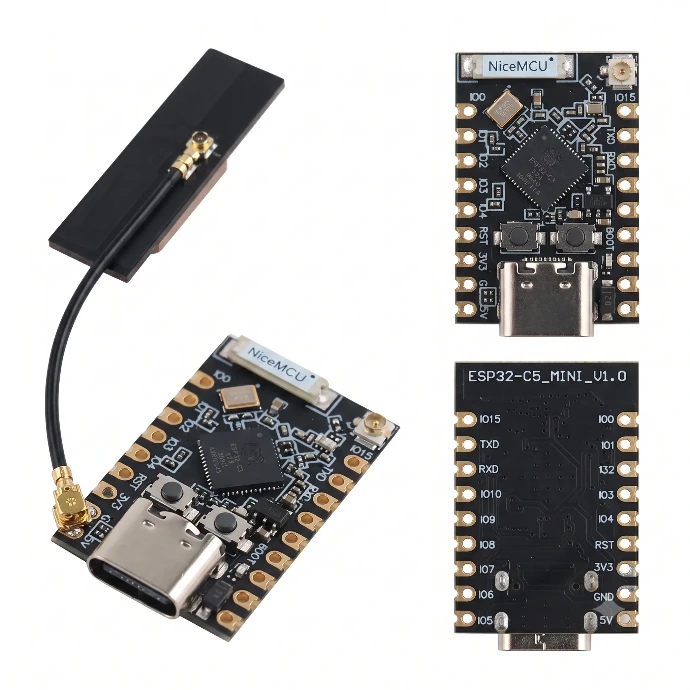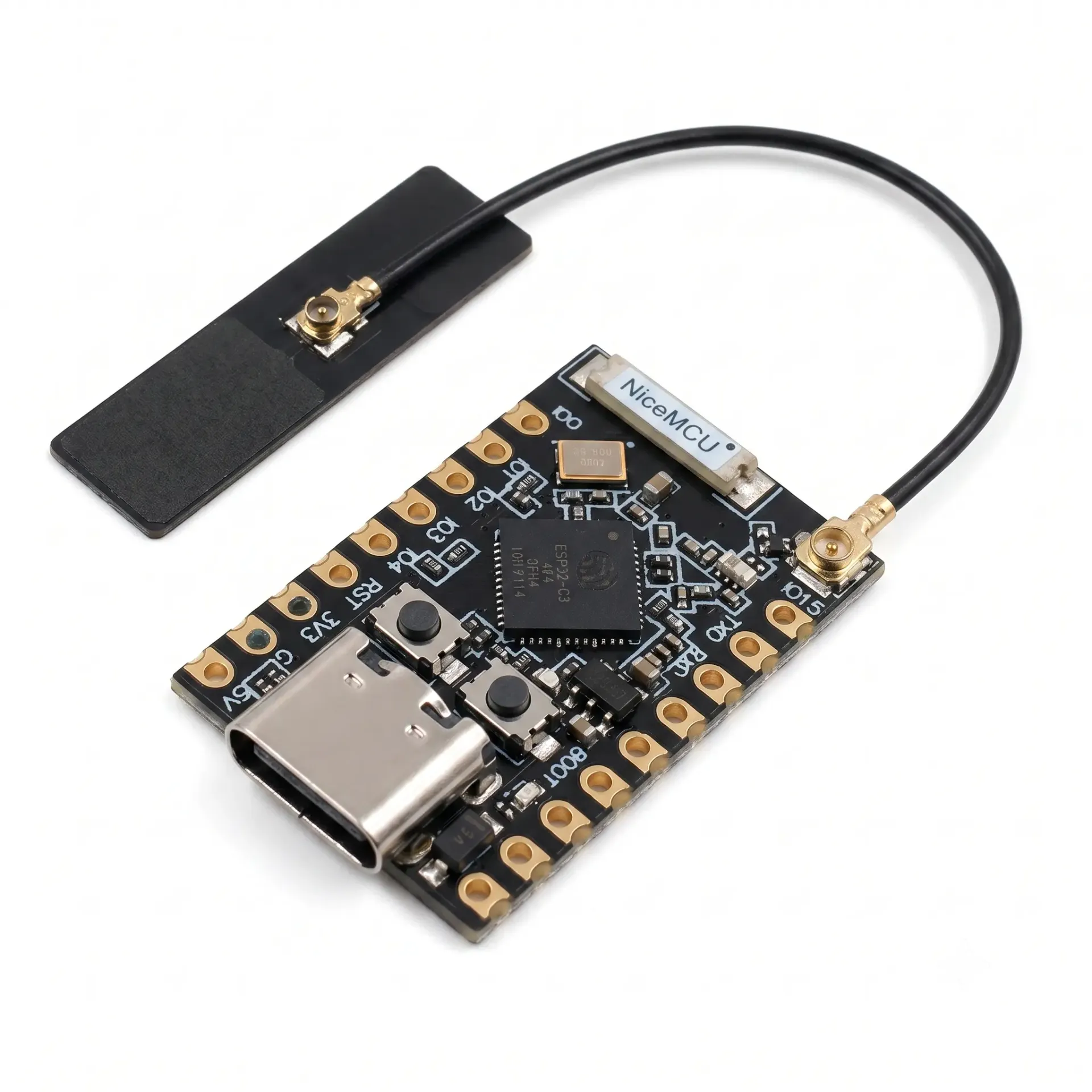
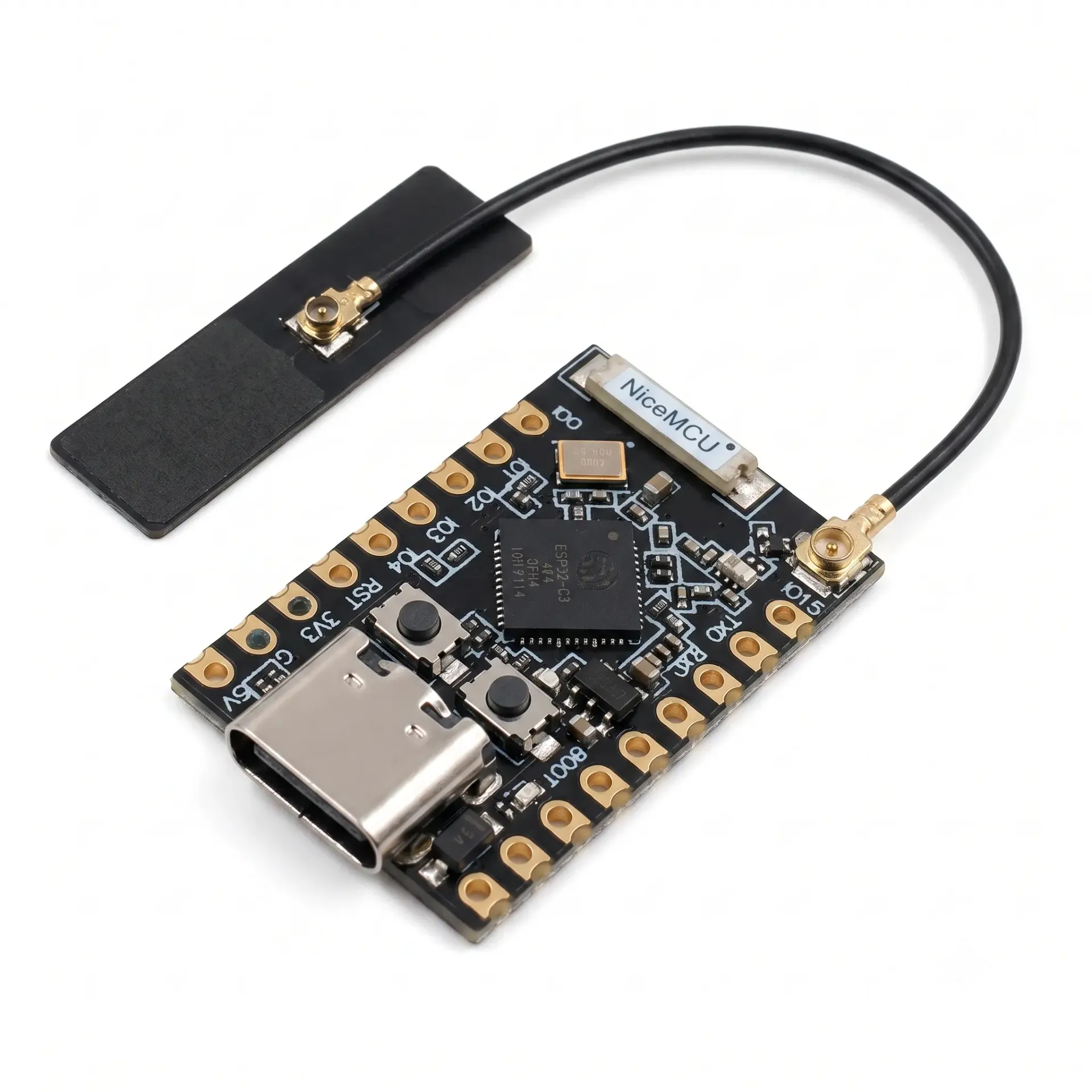
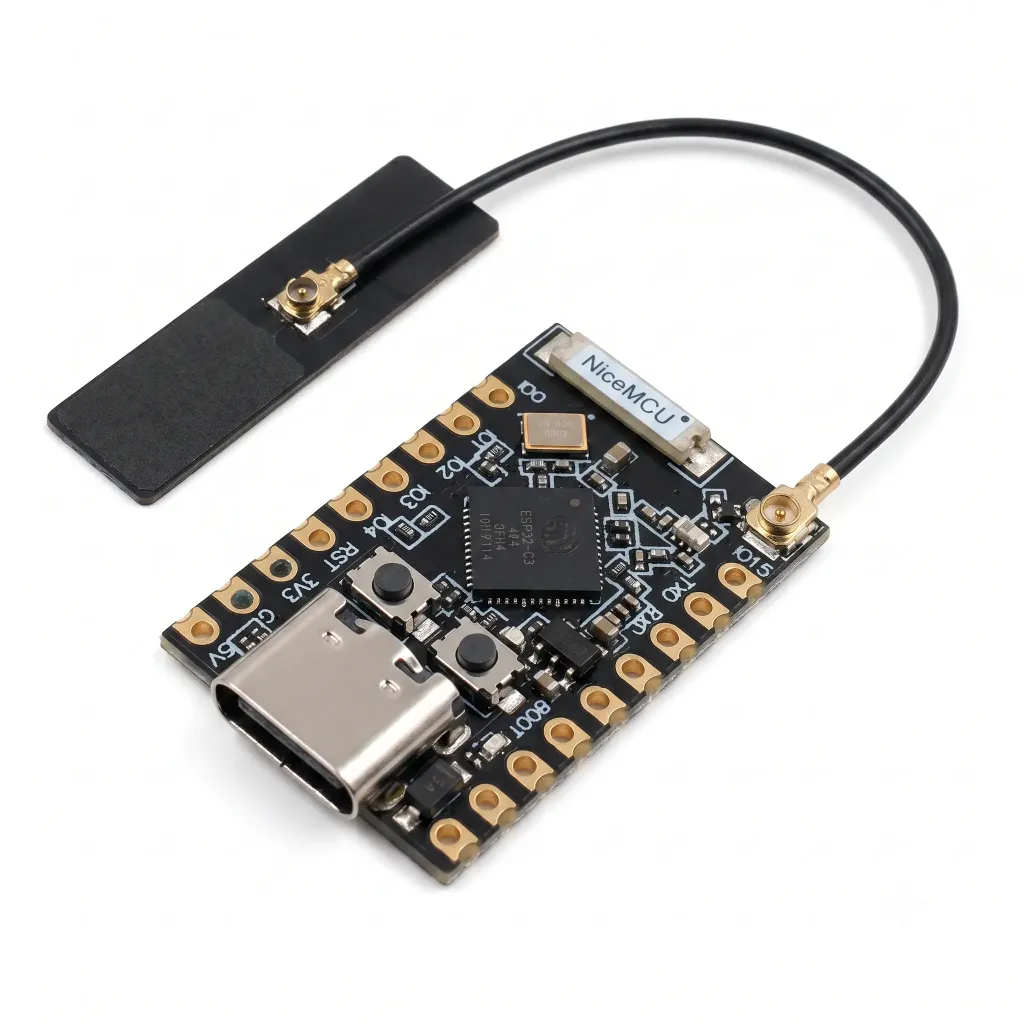
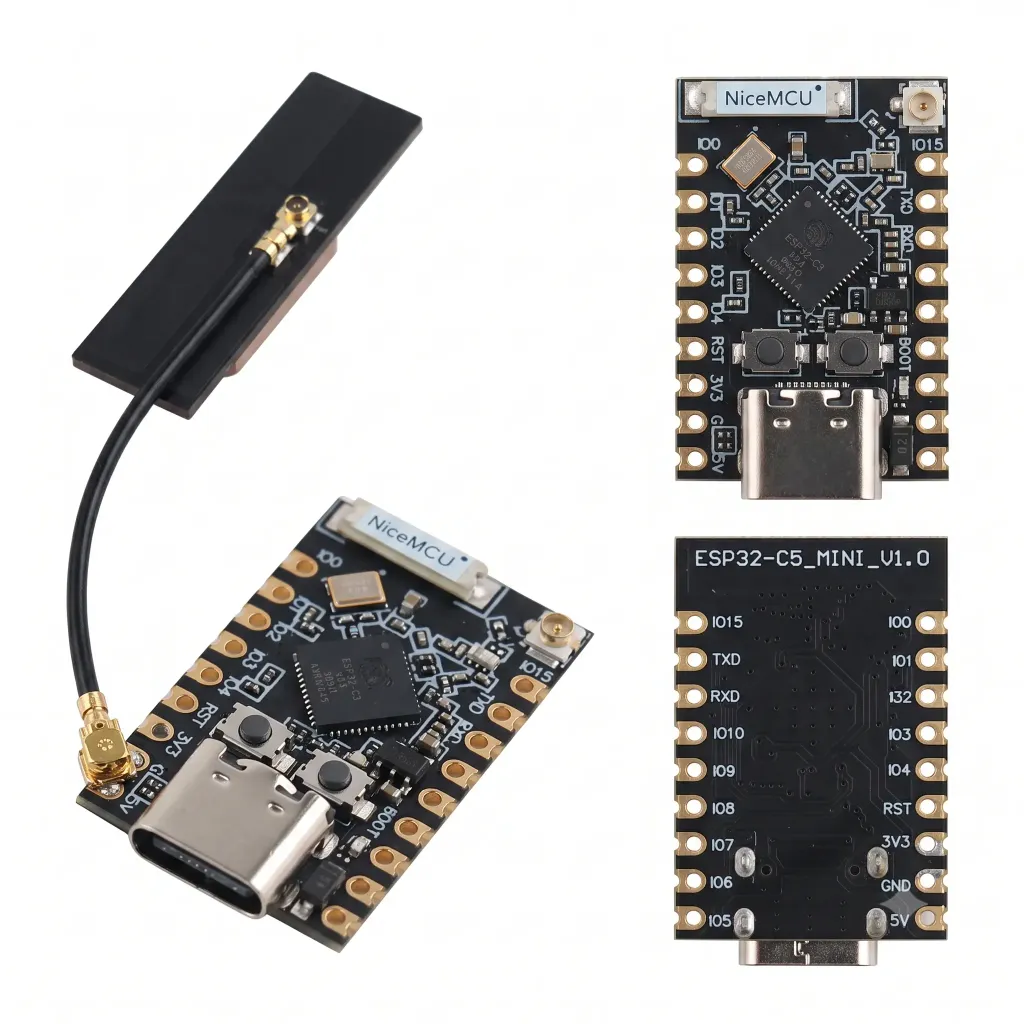
Hackoor™ ESP32-C5-MINI ESP32-C5 N4 Development Board
The ESP32-C5-MINI N4 Development Board is a compact, low-power IoT development platform based on Espressif’s ESP32-C5 wireless SoC. It combines dual-band 2.4 GHz and 5 GHz Wi-Fi 6, Bluetooth Low Energy, and IEEE 802.15.4 connectivity for next-generation connected-device development.
Built around a RISC-V architecture, the ESP32-C5 platform is designed for smart-home devices, industrial IoT, wireless prototyping, embedded systems, automation, and other space-constrained applications.
The board provides 4 MB Quad SPI Flash, multiple GPIO interfaces, hardware security features, and low-power operating modes, making it suitable for both development and embedded IoT applications.
₹ 1,349.00
₹ 1,349.00
Return & Refund Policy
This product is sold with no warranty, non-returnable, non-refundable, and is a final sale.
Shipping: 2-3 Business Days
This product is sold with no warranty, non-returnable, non-refundable, and is a final sale.
Shipping: 2-3 Business Days